
My Guide to 28 of Italy’s Most Interesting Historical Sites
My Guide to 28 of Italy’s Most Interesting Historical Sites
Cities in Italy live inside history. From sun-drenched ruins where emperors once walked, to quiet stone villages carved into cliffs and hillsides, every corner of the country feels like a story still unfolding. This is a place where ancient civilizations, Renaissance creations, and medieval towns coexist.
This is what makes Italy one of the most compelling destinations for families with teenagers. History is not abstract here. It is physical, specific, and impossible to ignore. A 14-year-old who finds history class tedious will stand in the Roman Forum for an hour, asking questions.
One practical note before we get into it: Italy is a year-round destination, and the timing of your visit makes a real difference.
April and October are the best months—good weather, accessible sites, manageable crowds.
December in Italy is quieter than most people expect and genuinely beautiful.
Peak summer—July and August—is the most crowded and the hottest. Plan around it if you can.
Here is a city-by-city guide to the historical places in Italy I find most interesting and most worth your time.
Rome – Where Ancient History Is Just Part of the Neighborhood
Rome is where history feels alive beneath your feet, with ruins and monuments layered into the modern capital. Once the heart of the Roman Empire, it remains one of the most historically significant cities in the world.
The city does not preserve its history behind glass—it lives alongside it.
For families, Rome is one of the best starting points in Italy. The sites are close together, the stories are accessible, and there is enough visual drama to keep even reluctant history students engaged.
Top Historical Sites in Rome
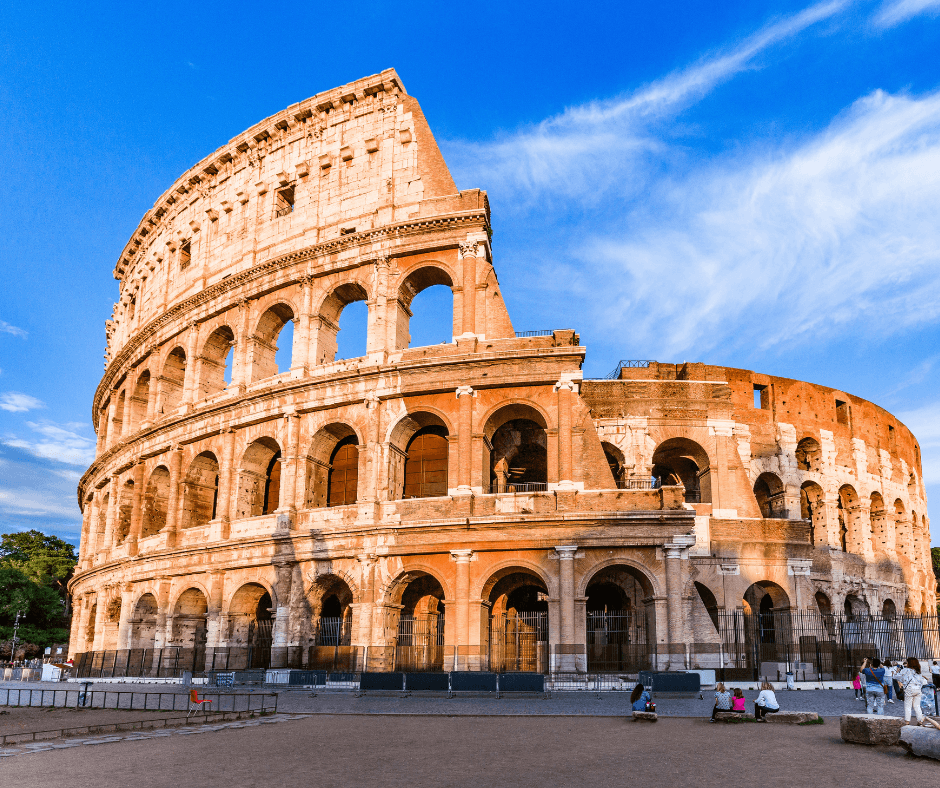
Colosseum: The Colosseum held 50,000 to 80,000 spectators and hosted gladiatorial games, animal hunts, and public spectacles for nearly 400 years. Standing inside it, the scale is genuinely difficult to process. Book tickets well in advance—timed entry is required and sells out. An early morning slot is worth the effort.
Roman Forum: Directly adjacent to the Colosseum, the Roman Forum was the center of Roman public life for centuries. Temples, government buildings, and markets once filled this space. What remains are evocative ruins—columns, archways, and foundations—but the layout is clear enough to understand what this place once was. A good guidebook or audio guide makes a real difference here.
Pantheon: Built around 125 AD and still structurally intact, the Pantheon is one of the best-preserved buildings from ancient Rome. The dome—142 feet in diameter with an open oculus at the top—remained the largest in the world for more than 1,300 years. There is no roof over the oculus. When it rains, the water falls through and drains out through the floor. Worth knowing before you visit.
Florence – The City That Changed Art Forever
Florence, under the Medici family in the 15th and 16th centuries, produced a concentration of artistic and architectural talent that has never been replicated. Brunelleschi, Botticelli, Leonardo da Vinci, Michelangelo—all working in or near this city within a few generations of each other. The evidence is everywhere.
Top Historical Sites in Florence
Florence Cathedral (Duomo di Firenze): Brunelleschi’s dome was an engineering problem that no one knew how to solve for over a century. When he finally completed it in 1436, it was the largest dome in the world. Standing outside the cathedral, looking up at it, is one thing. Climbing inside the dome—between the inner and outer shells, up the narrow staircases—and looking down at the frescoes below is something else entirely. Book the dome climb separately. It is worth it.
Uffizi Gallery: The Uffizi houses one of the most important collections of Renaissance art in the world. Botticelli’s Birth of Venus and Primavera are here. So are works by Caravaggio, Raphael, Titian, and Leonardo. It is a significant collection and can be overwhelming without a plan. For families, a focused two-hour visit to the highlights is more useful than trying to see everything. Pre-book tickets—the lines without them are long.
Piazza della Signoria: This square has been the political heart of Florence since the 14th century. It is also an open-air sculpture gallery. Michelangelo’s David—the original is in the Accademia, but a full-scale replica stands here—occupies the entrance to the Palazzo Vecchio. The square is worth time on its own, separate from any museum visit.
Venice – A City Built on Water and Ambition
Venice was an independent republic for over 1,000 years. At its peak, it controlled trade routes across the Mediterranean and accumulated enough wealth to fill its churches, palaces, and public buildings with some of the finest art and architecture in Europe. The city itself—built on 118 small islands connected by canals and bridges—is the most audacious feat of engineering and urban planning on this list.
Top Historical Places in Venice
Venice Historic Center: A UNESCO-listed cityscape built on canals and rich in medieval and Renaissance architecture.
St. Mark’s Basilica: A stunning Byzantine-style cathedral known for its golden mosaics and ornate design.
Palazzo Ducale: A Gothic masterpiece that once served as the seat of Venetian political power and the Doge’s residence.
Puglia Region – Ancient Architecture and Unique Stone Living
Puglia sits at the heel of Italy's boot, and most visitors never make it this far south. That is worth knowing, because it means the sites here are accessible in a way that Rome and Florence simply are not. Puglia has been shaped by Greek, Roman, Byzantine, Norman, and Spanish influences, and the architecture reflects all of them.
Puglia offers a quieter but deeply historic side of Italy, where old building traditions still define the landscape. The region is recognized for its distinctive architecture and for its long-standing cultural influences from across the Mediterranean.
Top Historical Sites in Puglia
Alberobello Trulli District: The trulli of Alberobello are whitewashed stone houses with distinctive conical roofs, constructed using a dry-stone technique with no mortar. The method dates back centuries and was used, in part, because buildings could be quickly dismantled to avoid property taxes, which tells you something interesting about the relationship between architecture and government. The entire Rione Monti district, with over 1,000 trulli, is a UNESCO World Heritage Site.
Centro Storico, Lecce: Lecce is sometimes called the Florence of the South, though that comparison undersells it. The city's baroque architecture—elaborate facades carved from the local golden limestone—is some of the most ornate in Italy. The historic center is compact and walkable. In the middle of the main piazza sits a well-preserved Roman amphitheater, excavated only in the early 1900s. Worth a stop even if the rest of Puglia is not on your itinerary.
Castello Aragonese: The Castello Aragonese sits on a volcanic rock off the coast of Ischia, connected to the island by a stone bridge. The original fortress dates to 474 BC. It has been a Greek fortress, a Roman stronghold, a medieval castle, a convent, and a prison at different points in its history. The views from the top over the Bay of Naples are among the best in the region.
Matera – One of the Oldest Continuously Inhabited Cities in the World (And Possibly the Most Surprising City in Italy)
Matera is one of the oldest continuously inhabited cities in the world. People have been living in its cave dwellings—carved directly into the limestone cliffs of two ravines—for at least 9,000 years. The Italian government considered the city an embarrassment in the 1950s and forcibly relocated its residents. It is now a UNESCO World Heritage Site and was named a European Capital of Culture in 2019.
This is not a well-known story, and it makes Matera one of the most interesting places to bring teenagers.
Top Historical Sites in Matera
Sassi di Matera: Ancient cave dwellings carved into limestone cliffs that represent some of the world’s oldest human settlements.
Cripta del Peccato Originale: A prehistoric cave church in Matera featuring some of the oldest known frescoes in southern Italy, often called the “Sistine Chapel of rock art.”
Cattedrale di Matera: A 13th-century Romanesque cathedral perched on the highest point of the city, offering sweeping views over the ancient Sassi district.
Naples – Gateway to Ancient Wonders
The Naples region contains Pompeii and Herculaneum, which are reason enough to visit. Both were buried by the eruption of Mount Vesuvius in 79 AD and preserved in different ways. Pompeii is larger and more famous. Herculaneum is smaller, better preserved, and usually less crowded. If you only have time for one, Herculaneum offers a more intimate and in some ways more detailed picture of Roman life.
Top Historical Places Near Naples
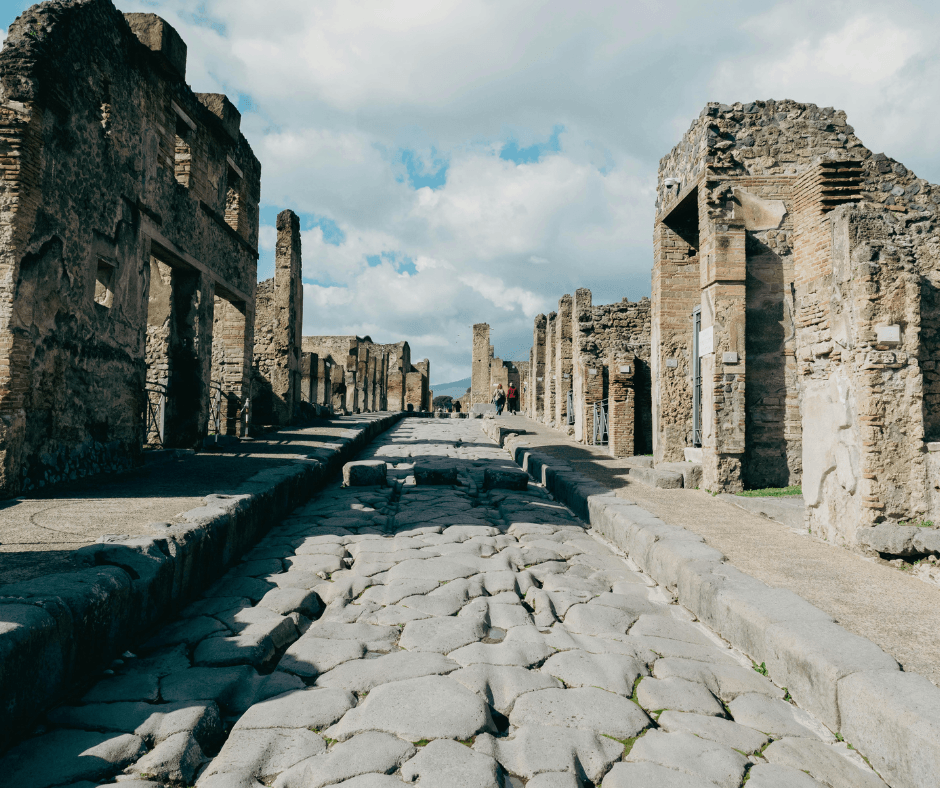
Pompeii Archaeological Park: Pompeii was home to approximately 11,000 people when Vesuvius erupted on August 24, 79 AD. The volcanic ash preserved the city—its streets, buildings, bakeries, and gardens—with extraordinary accuracy. The plaster casts of victims, made by pouring plaster into the voids left by decomposed bodies, are among the most affecting things you will see in Italy. Go with a guide or a strong audio guide. The site is large, and context matters enormously here.
Herculaneum: Herculaneum was buried not by ash but by pyroclastic flows, which preserved organic materials—wooden furniture, food, and cloth—that Pompeii lost. The site is smaller and more compact, which makes it easier to understand as a complete picture of Roman urban life. The wooden doors, the carbonized food still sitting in shop displays, and the boat storage sheds near the ancient shoreline are details that stay with you long after you leave.
Galleria Borbonica: This underground tunnel system runs beneath the historic center of Naples and was built in 1853 for military use. During World War II, it served as a civilian air raid shelter. Today it houses a collection of objects left behind during the war—vehicles, furniture, personal belongings—sitting exactly where they were left. It is one of Italy's more unusual historical sites and offers teenagers something genuinely thought-provoking to reflect on.
Milan – Incorporate, The City I Did Not Expect to Love
I went to Milan without particularly high expectations. It has a reputation as a fashion and business city more than a historical one, which is fair but incomplete. The historical layer of Milan is substantial, and the concentration of significant sites in a compact area surprised me. I have planned many trips to Milan since then.
Top Historical Sites in Milan
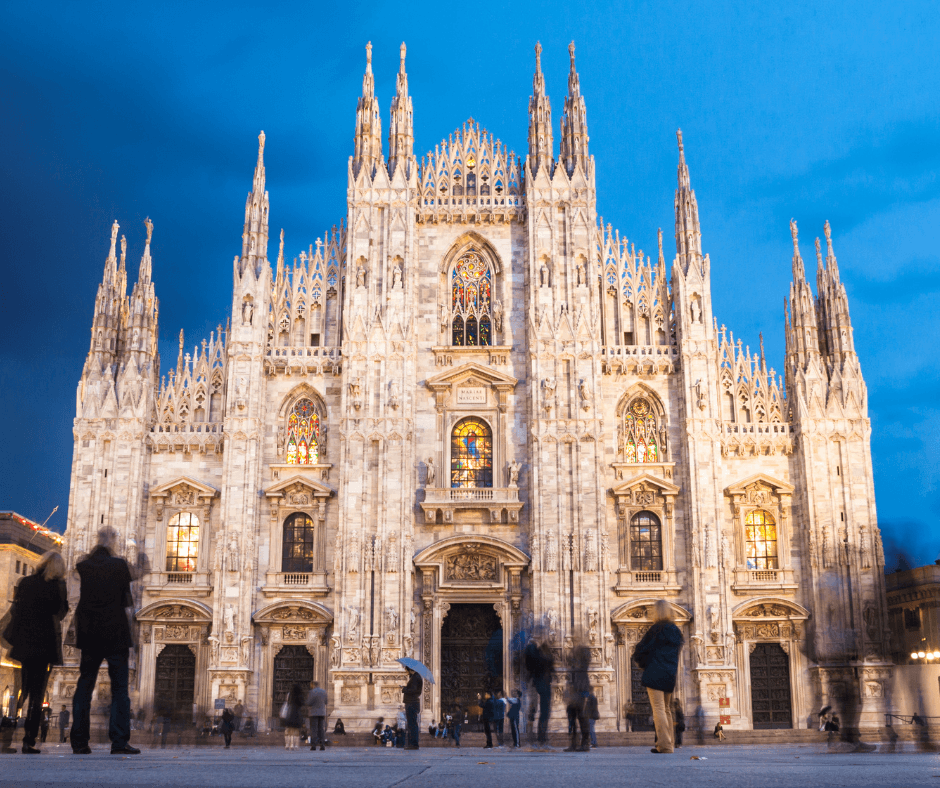
Milan Cathedral (Duomo di Milano): A massive Gothic structure known for its finely detailed façade and centuries-long construction.
Castello Sforzesco: A grand Renaissance-era fortress that houses some of Milan’s most important art collections.
Basilica di Santa Maria delle Grazie: A UNESCO-listed church in Milan, home of Leonardo da Vinci’s The Last Supper.
Siena – Medieval Italy Preserved in Time, And a Trusted Recommendation
I have not visited Siena personally, but it is consistently recommended by colleagues and clients whose judgment I trust.
Siena ranks among the best-preserved medieval cities in Europe. The city is also home to the Palio, a bareback horse race held twice a year—July 2nd and August 16th—in the Piazza del Campo. Seventeen city districts, called contrade, compete for a painted silk banner. The race itself lasts about 90 seconds. The rivalry between the contrade goes back centuries and is taken with complete seriousness. It is one of the most electric and genuinely strange public events in Italy, and it is worth planning a trip around if the dates align.
Top Historical Places in Siena
Siena Historic Center: A beautifully preserved UNESCO-listed medieval city center famous for its Gothic architecture and historic square.
Siena Cathedral: Italian Romanesque-Gothic architecture housing intricate marble floors and elaborate artworks.
Basilica of San Domenico: A major Gothic church in Siena known for housing relics of Saint Catherine.
Pisa – More Than the Leaning Tower
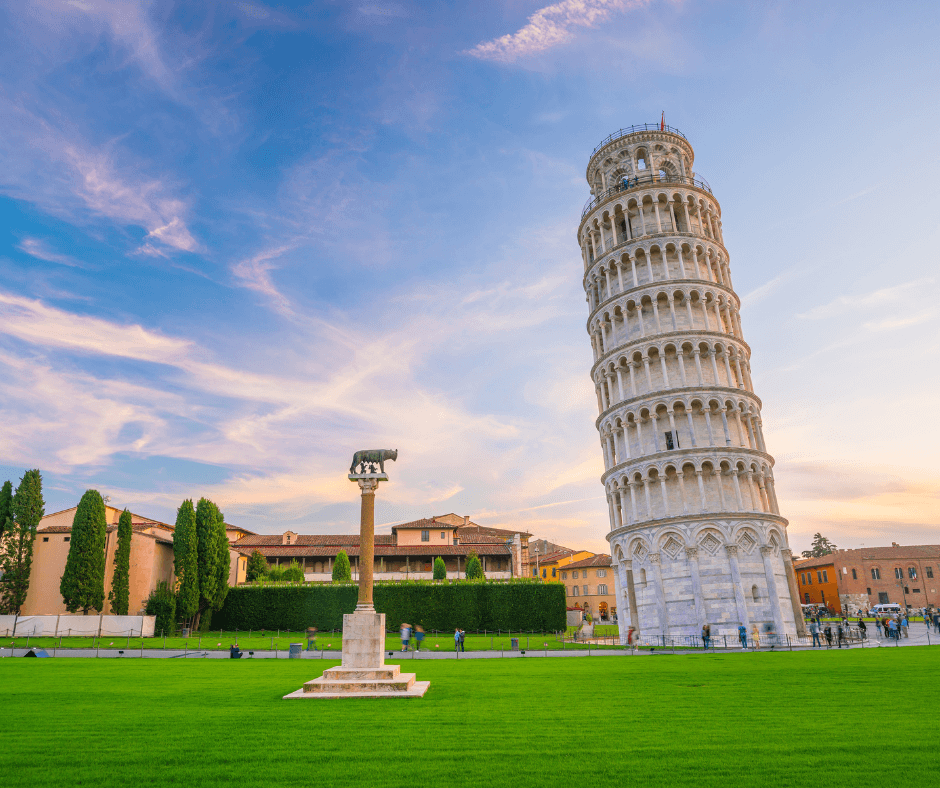
Pisa was a major maritime republic in the 11th and 12th centuries, competing with Genoa, Venice, and Amalfi for control of Mediterranean trade routes. The wealth from that period funded the Piazza dei Miracoli—the Cathedral Square—which contains four significant Romanesque buildings. Most visitors photograph the tower and leave. The rest of the square deserves more time than it typically receives.
I have not visited Pisa personally, but clients who have made the detour from Florence or Lucca consistently find it worthwhile.
Top Historical Sites in Pisa
Pisa Cathedral Complex: Features the iconic Leaning Tower and showcases Romanesque architectural brilliance.
Camposanto: a monumental cemetery in Pisa filled with frescoes, ancient tombs, and sacred historical importance.
Sicily – Ancient Greece, Without Going to Greece
I spent 10 days in Sicily, and it became one of my favorite trips. The island has everything—ancient history, deep culture, beautiful water, genuinely good beaches, hiking, and outdoor adventure—and it does not have the crowds you find on mainland Italy.
Sicily has been Greek, Roman, Arab, Norman, Spanish, and Italian at various points in its history, and the architecture reflects every layer. The Greek ruins here are among the best-preserved in the world—in some cases, better preserved than comparable ruins in Greece itself. The sites in Agrigento and Syracuse belong on any serious Italy itinerary, but honestly, Sicily deserves a dedicated trip on its own.
Top Historical Sites in Sicily
Valle dei Templi (Valley of the Temples): An extraordinary archaeological site featuring some of the best-preserved ancient Greek temples outside Greece.
Greek Theatre of Syracuse: One of the largest ancient theaters ever built and still used today for performances.
When to Visit Italy
April and October are the best months for visiting Italy's historical sites. The weather is comfortable, the sites are fully open, and the crowds are manageable. Summer—particularly July and August—brings intense heat in southern Italy and significant crowds at every major site.
The holiday season is underrated. December in Italy is quieter than most people expect. The major sites remain open, the cities are decorated, and the Christmas markets in Florence and Bologna are worth a visit on their own.
Italy rewards visitors who plan around the crowds rather than alongside them.
Practical Notes About Planning a Trip to Italy
Book tickets in advance. The Colosseum, the Uffizi, The Last Supper, and Pompeii all require advance booking. The Last Supper sells out months ahead. Do not leave ticket purchases until you arrive.
Dress for churches. Shoulders and knees must be covered to enter most churches in Italy. A lightweight scarf or wrap works well and takes up no space in a bag.
Carry some cash. Major sites accept credit cards, but smaller entrance fees, local guides, and the best lunch spots often prefer cash.
Use the train network. Italy's high-speed rail connects Rome, Florence, Venice, Milan, and Naples efficiently and comfortably. It is the most practical way to move between cities.
Allow more time than you think you need. Every site on this list rewards slow attention. The clients who return from Italy, most satisfied, are those who visited fewer places and stayed longer at each.
Italy's historical sites reward careful planning. If you are putting together an itinerary for your family, a couple's trip, or a group of your favorite travel friends, we would love to help you get the details right.
Schedule a travel planning session with Allison.
Italy’s Historic Sites: What Travelers Should Know
When is the best time to visit Italy’s historic sites?
The best time to visit Italy’s historical places is during spring (April–June) and fall (September–October), when the weather is pleasant, and crowds are smaller. Summer can be extremely busy, especially in cities like Rome, Florence, and Venice.
Do you need to book tickets in advance for Italy’s major historical attractions?
Yes, it’s highly recommended to book tickets in advance for popular sites to avoid long lines and sold-out entry times. Many attractions also offer skip-the-line or timed-entry tickets for convenience.
How many days do you need to see Italy’s top historical sites?
Ten to fourteen days works well for covering several cities at a reasonable pace. If you only have a week, pick two or three cities and stay longer in each one. You will get more out of it.
Are guided tours worth it for historical sites in Italy?
For sites like Pompeii, the Roman Forum, and the Uffizi, yes. A knowledgeable guide provides context that enriches the experience. For teenagers, especially, a good guide makes the difference between a history lesson that sticks and one that doesn't.
What should you wear when visiting churches and religious sites in Italy?
Visitors should dress modestly, covering shoulders and knees when entering churches such as St. Mark’s Basilica or the Duomo in Florence and Milan. A light scarf or shawl is useful for quick coverage and doesn’t take up much room in your suitcase.
Can you visit multiple historical sites in one day?
Yes, many Italian cities have clusters of attractions close together. However, it’s best to avoid overpacking your schedule to fully appreciate each site. Stick to one or two a day to make the most of your time.
Is it easy to travel between Italy’s historical cities?
Italy's high-speed rail is excellent. Rome to Florence takes about 90 minutes. Florence to Venice takes about two hours. Milan to Rome takes about three hours. It is comfortable, reliable, and far less stressful than driving between cities.
Do you need cash for historical attractions in Italy?
Major attractions accept credit cards. Carry some cash for smaller entrance fees, local guides, markets, and the kinds of restaurants that are often the best ones.
